
Why wood rather than plastic?
Wood is a softer surface for a blade, so the edge stays sharp longer. Wood also lives with use: small marks even out and the board matures instead of turning scarred.
Guide
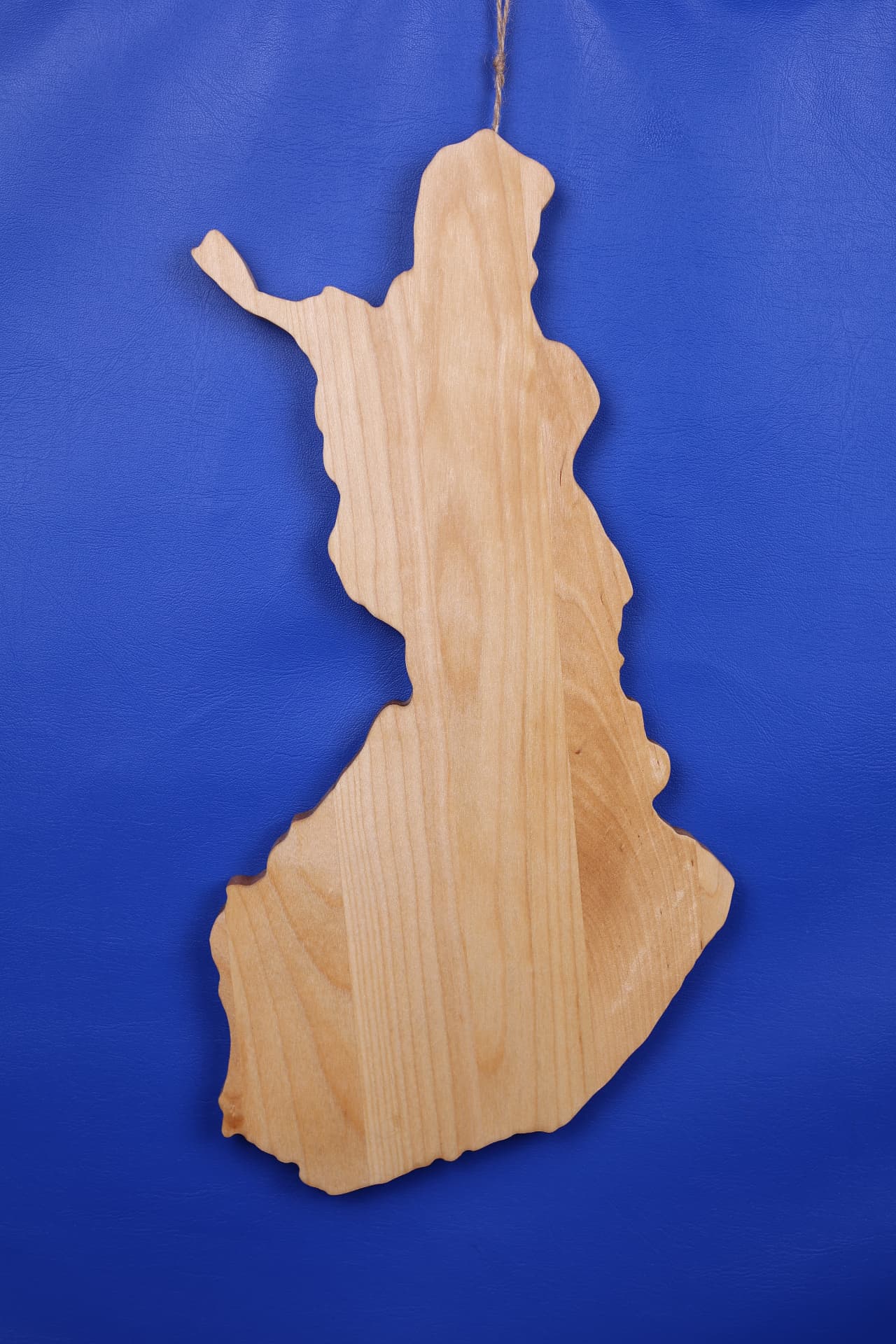
A good wooden cutting board lasts for decades and is kind to knives. Here you will find the Upea Puu boards plus clear guidance on washing and oiling — the two things that decide how long a board lives.
Wood is a softer surface for a blade, so the edge stays sharp longer. Wood also lives with use: small marks even out and the board matures instead of turning scarred.
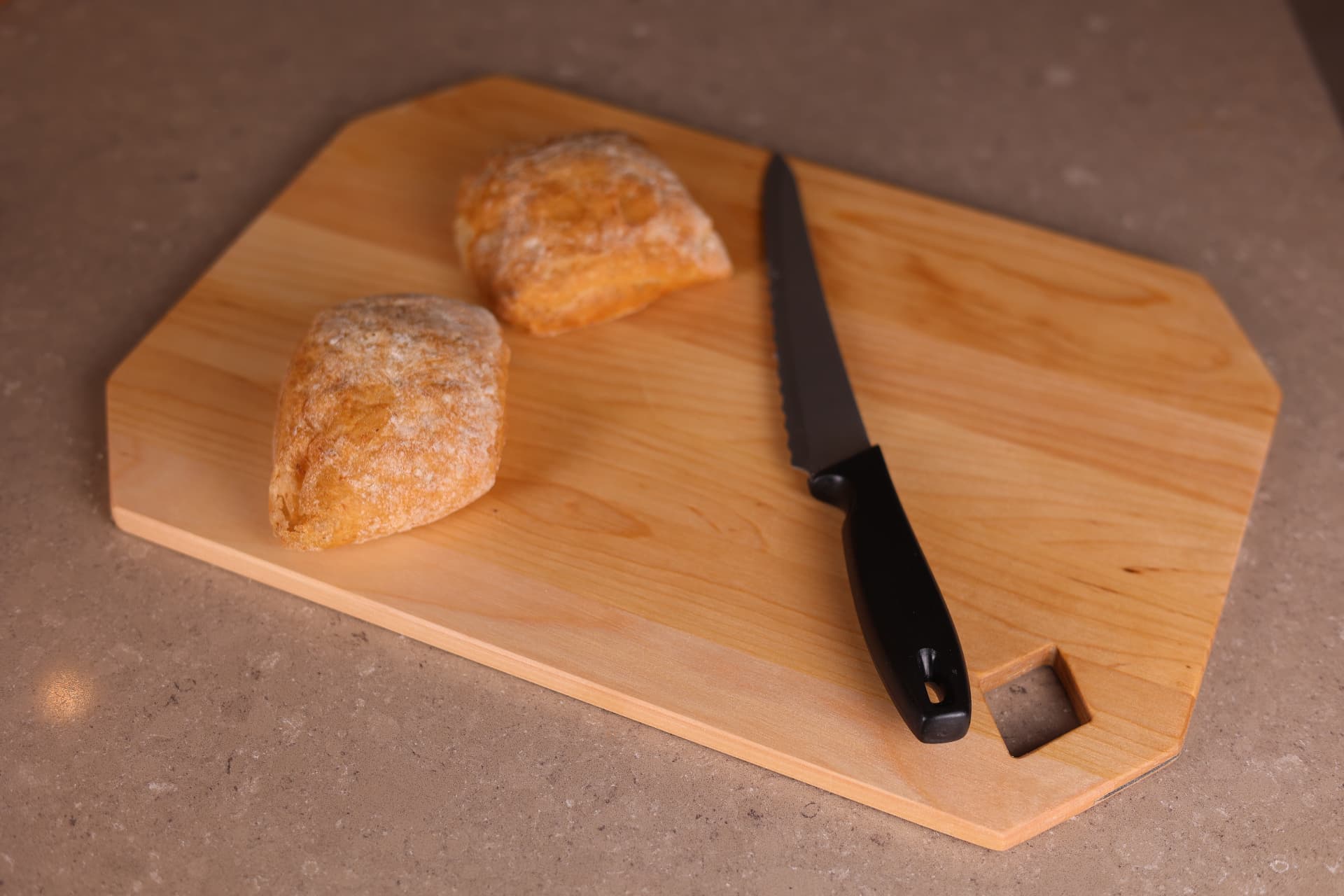
A small board is handy for cheese, lemon and breakfast. A large board is a work surface: vegetables, bread and meat fit at once and nothing slides off the edge. Many boards double as serveware — cut, carry and serve from the same surface.
Hand-wash right after use with lukewarm water and mild soap. Dry it standing up so both faces dry evenly. Never put a wooden board in the dishwasher and never let it soak — moisture swells the wood and causes cracks. Odours lift with half a lemon and coarse salt.
Oil the board every few months — or as soon as the surface looks dry and pale. Use a food-safe wood oil or a neutral cooking oil: spread a thin layer, let it soak in for a few hours and wipe off the excess. Regular oiling is the cheapest way to extend a board's life.